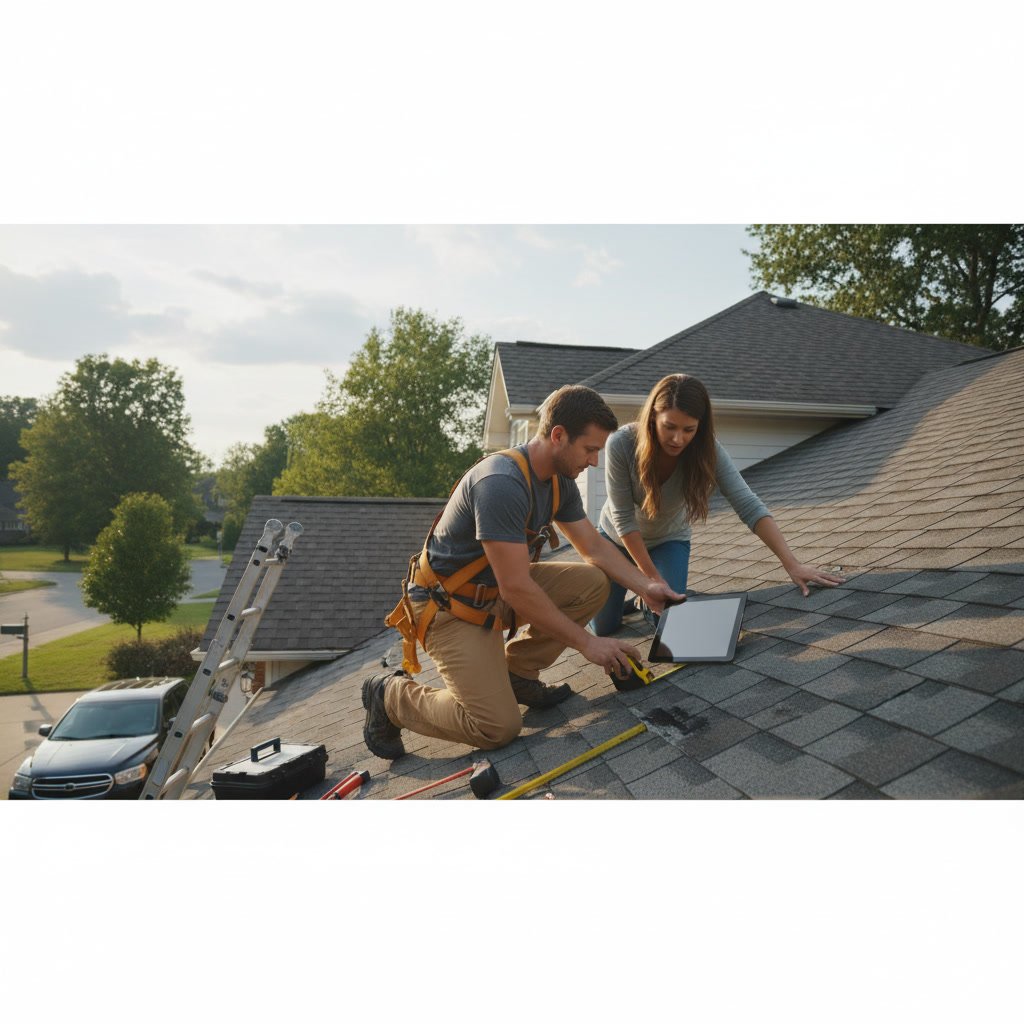
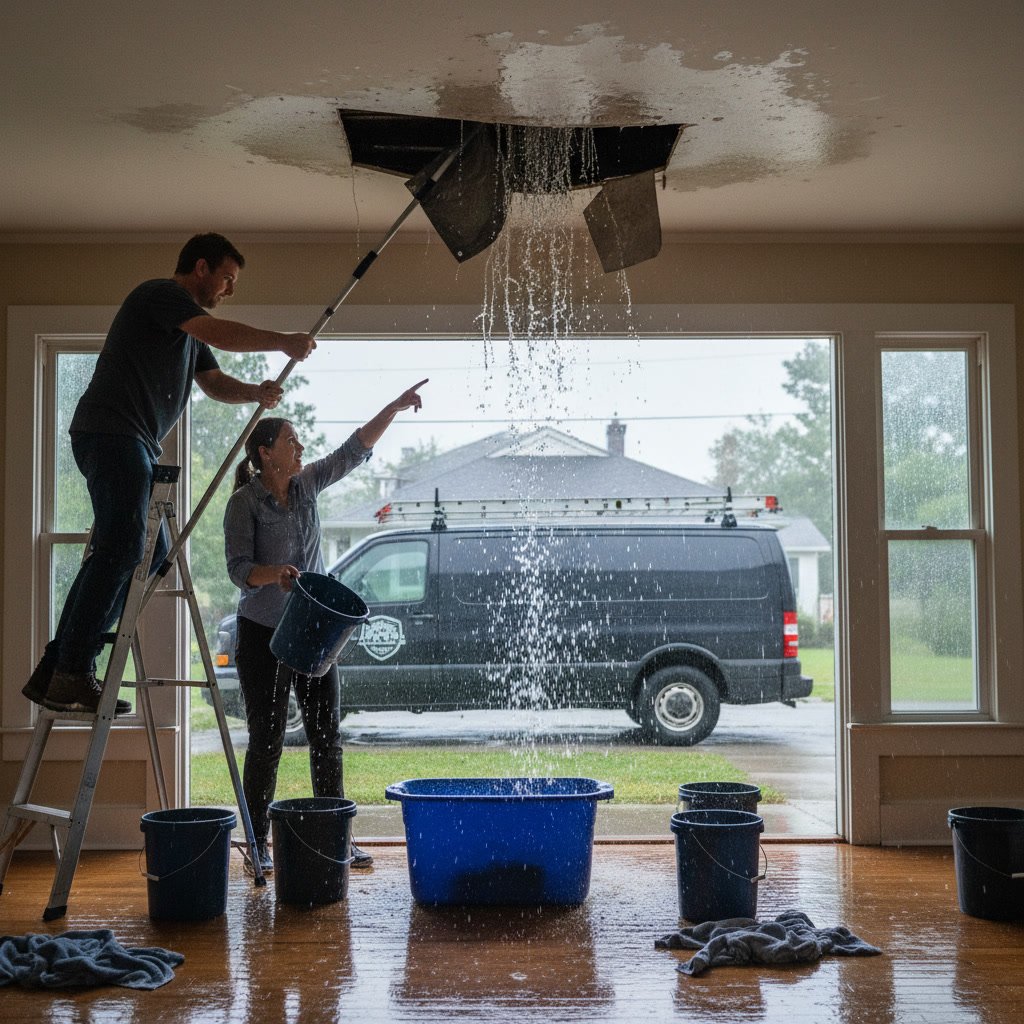
Water dripping from your ceiling creates a sinking feeling in any homeowner’s stomach. When you discover an emergency roof leak in Dover, the clock starts ticking. Water damage spreads quickly through ceilings, walls, insulation, and into your home’s structure. While professional help is essential, the actions you take in those first critical minutes can mean the difference between a minor repair and extensive property damage.
This guide walks you through the specific steps to protect your Dover home from further damage while you wait for a roofing contractor to arrive. You’ll learn how to contain the leak, protect your belongings, document the damage for insurance, and what information to gather before making that emergency call.
Immediate Steps to Contain the Water Damage
The moment you spot water coming through your ceiling, move quickly but safely. Your first priority is preventing the leak from spreading to more areas of your home.
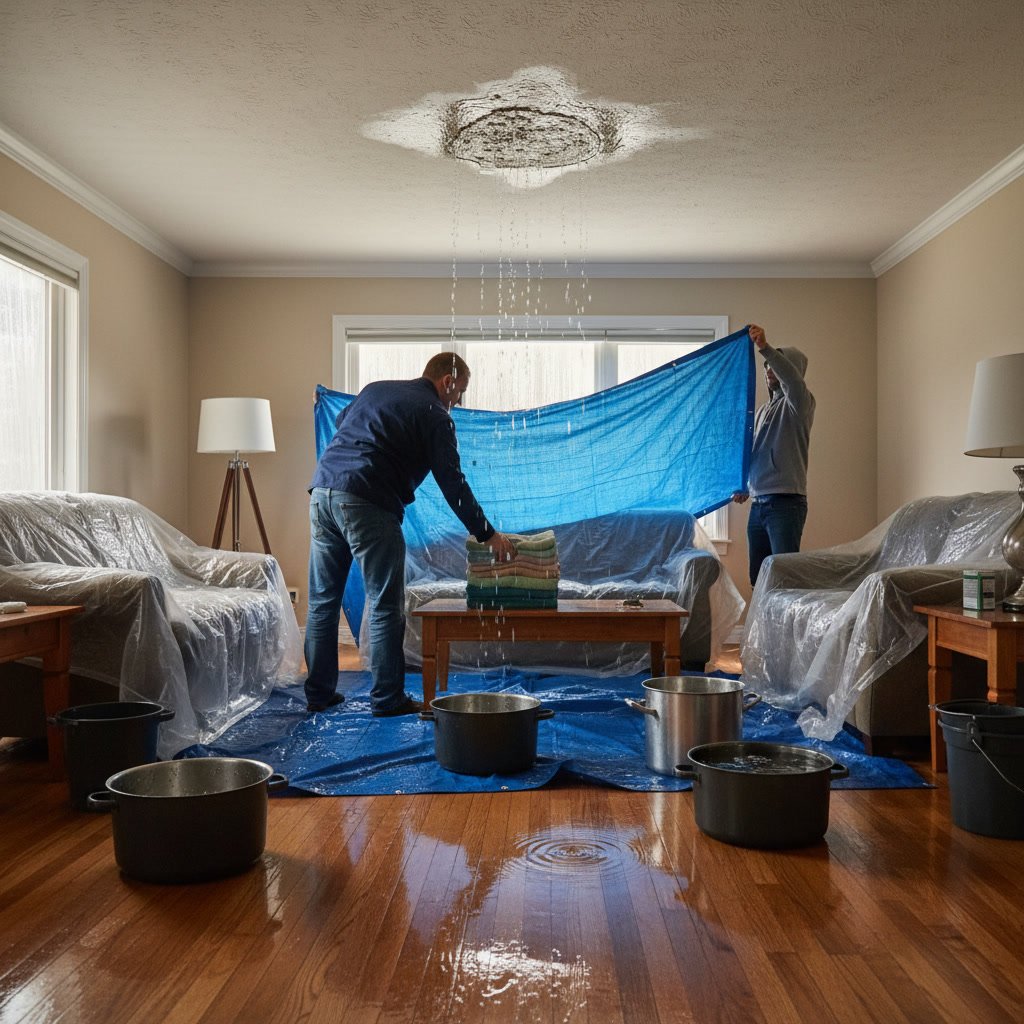
Clear the affected area of furniture, electronics, and valuables immediately. Water follows the path of least resistance and can spread across ceilings and down walls faster than you might expect. Even items that seem far from the visible leak can get wet within minutes.
Place buckets, trash cans, or any large containers under active drips. If water is spreading across a ceiling, the drywall or plaster will become saturated and heavy. When you see a bulge forming, carefully puncture the lowest point with a screwdriver to create a controlled drainage point. This prevents a larger section of ceiling from collapsing unexpectedly.
Move quickly to the attic if you can access it safely. Locate the source of water entry by looking for wet insulation, water stains on rafters, or active water flow. Place a bucket or container in the attic to catch water before it spreads further into your home’s structure.
Protecting Your Belongings and Documenting Damage
Once you’ve contained the immediate water flow, shift your focus to protecting your property and creating a record for insurance purposes.
Use towels, mops, or a wet vacuum to remove standing water from floors. The longer water sits on hardwood, tile, or carpet, the more permanent damage it causes. Wood flooring can warp within hours of water exposure, and carpet padding becomes a breeding ground for mold in as little as 24 to 48 hours.
Take photos and videos of everything. Capture the water damage on ceilings, walls, and floors. Document wet insulation in the attic, damaged belongings, and the buckets catching water. Photograph any visible roof damage from the ground if safe to do so. This visual evidence becomes critical when filing insurance claims.
Make a written list of damaged items with approximate values and purchase dates if you remember them. Include furniture, electronics, flooring, and structural elements like drywall or ceiling tiles. Most homeowners insurance policies require detailed documentation of losses.
Pro Tip: Create a timestamp for your documentation by including a newspaper or your phone’s date display in some photos. This proves when the damage occurred, which can be important for insurance claims with tight reporting deadlines.
What Not to Do During an Emergency Roof Leak
Avoid climbing on your roof during or immediately after a storm. Wet roofing materials are extremely slippery, and emergency situations often occur during weather conditions that make roof access dangerous. Leave roof assessment to professionals with proper safety equipment.
Don’t use electrical appliances in areas with standing water or active leaks. Water and electricity create a serious shock hazard. If water is dripping near outlets, light fixtures, or electrical panels, turn off power to that circuit at your breaker box.
Never ignore small leaks thinking they’ll wait until morning or next week. A drip that seems minor can indicate significant water pooling in your ceiling or attic. What looks like a cup of water per hour can actually mean gallons are trapped above your ceiling, causing hidden structural damage.
Temporary Measures to Slow the Leak
After securing your belongings and documenting the damage, you can take some temporary steps to reduce water entry until professional roof leak repair arrives.
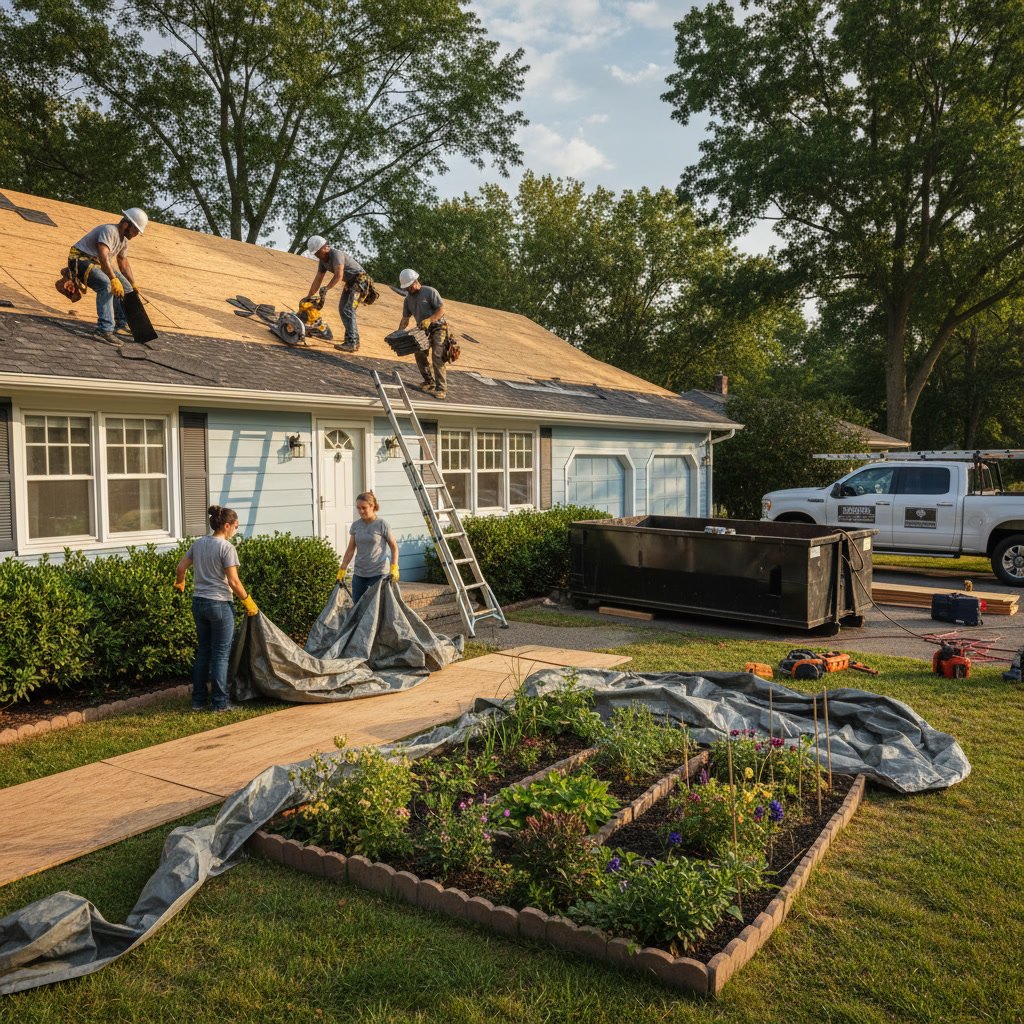
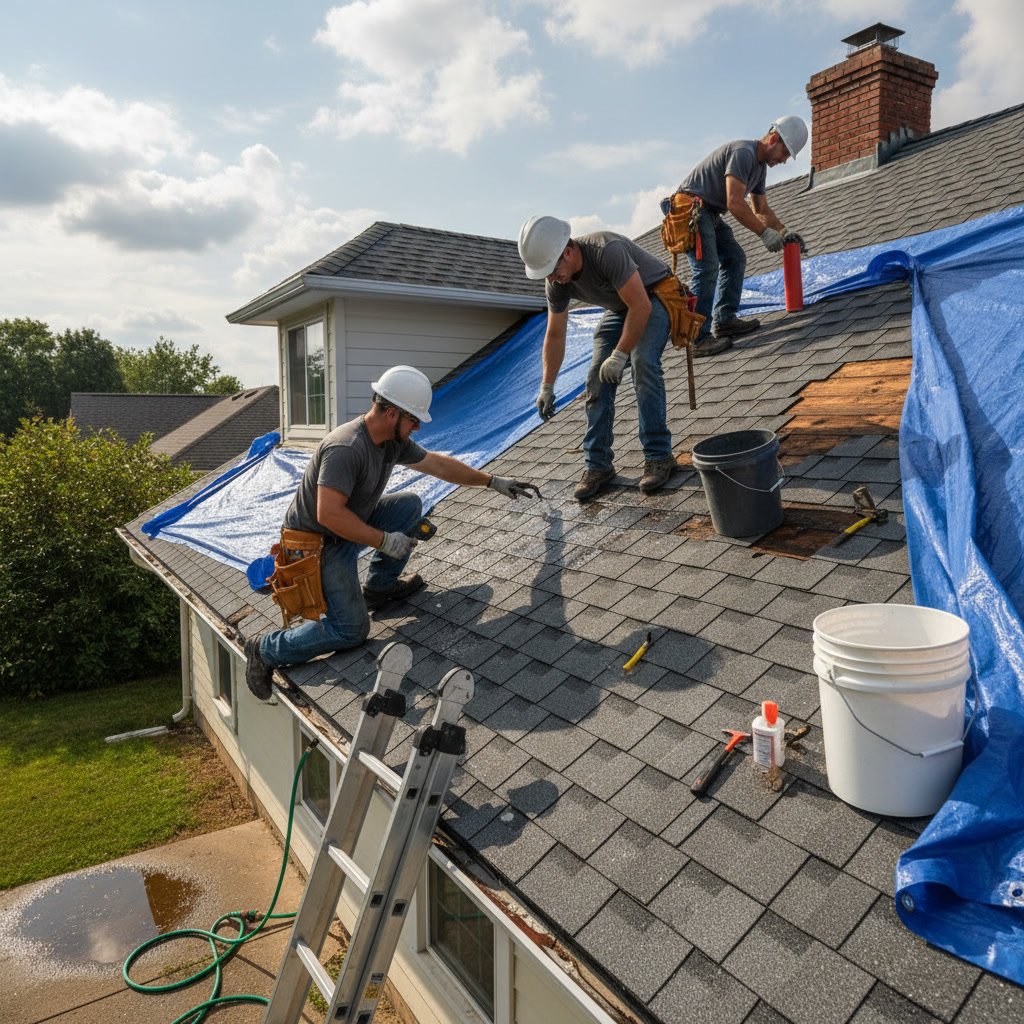
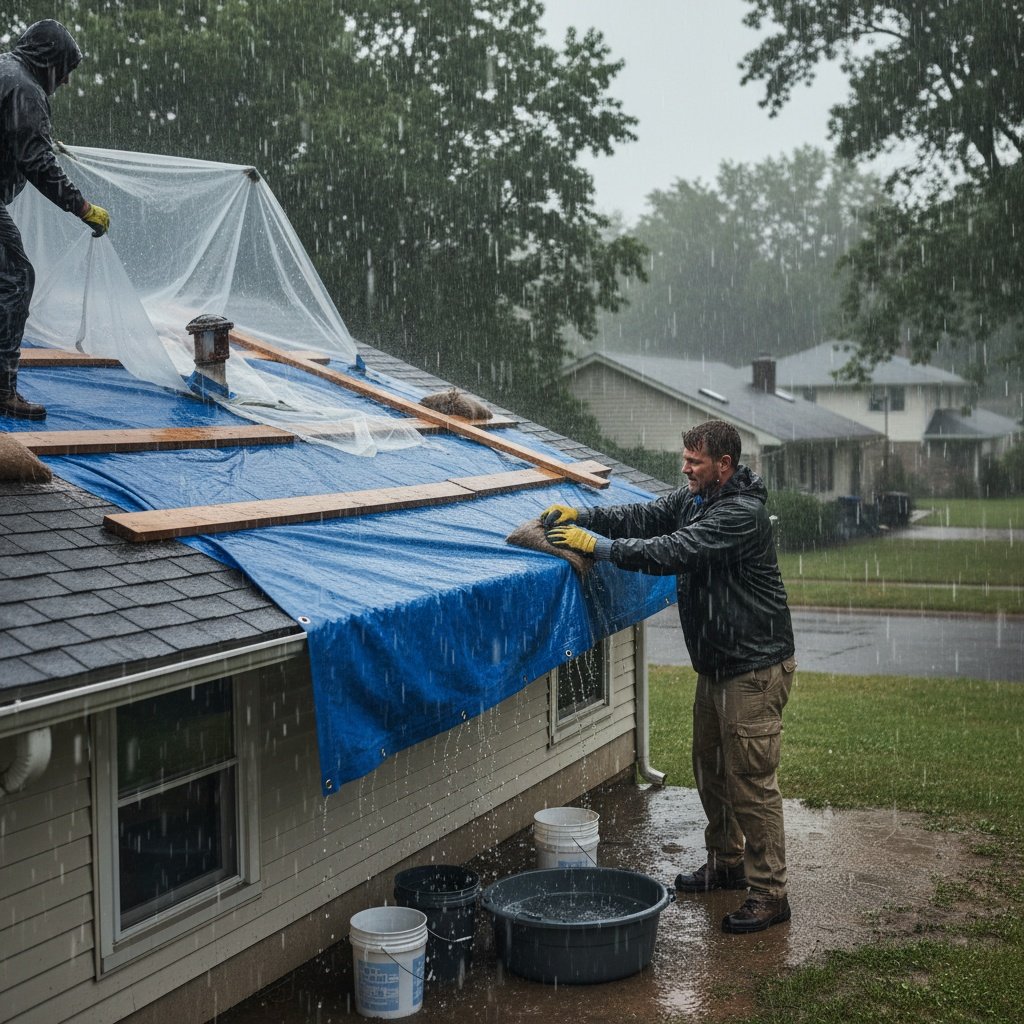
If you can safely access the exterior damage point from the ground or through an attic opening, heavy-duty tarps provide temporary protection. Secure tarps with boards weighted down by bricks or sandbags, never by nailing into your roof, which creates additional holes. Extend the tarp at least four feet past the damaged area in all directions.
For smaller leaks visible from the attic, a piece of plywood placed under the leak can redirect water toward a bucket. This prevents water from spreading through insulation to other ceiling areas. Remember that this is strictly temporary and does not fix the underlying roof damage.
In Dover’s climate, roof leaks often occur during afternoon thunderstorms. These storms typically pass within an hour or two, but the damage continues if water remains trapped in your roofing system. Even after rain stops, water pooled on a flat roof or in damaged valleys continues flowing into your home.
Information to Gather Before Calling a Contractor
When you’re ready to call for emergency service, having specific information ready helps contractors respond more effectively and provide accurate guidance.
Note the location of the leak inside your home. Is it in a bedroom, bathroom, kitchen, or living area? Describe what’s directly above that space. Is there a second story, an attic, or is it directly under the roof? This helps contractors estimate the scope before arrival.
Identify your roof type if possible. Common options in the Dover area include asphalt shingles, tile roofing, and flat roofing systems. Different materials require different repair approaches and tools.
Estimate the age of your roof if you know it. Roofs over 15 years old may have warranty considerations or require different repair strategies than newer installations. If you have documentation from a previous roof installation or repair, keep it handy.
Check if you have homeowners insurance and locate your policy information. Many policies cover sudden roof damage from storms, falling trees, or other unexpected events. Have your policy number ready when calling contractors, as some work directly with insurance companies.
Questions to Ask Your Emergency Roofing Contractor
When you reach a roofing company for emergency service, ask about their response time. True emergency services should be available within hours, not days. Ask if they charge a separate emergency service fee and what that covers.
Verify their license number. In Florida, roofing contractors must hold a valid state license. Quick Quote Roofing operates under license CCC1332836, which you can verify through the Florida Department of Business and Professional Regulation.
Ask whether they’ll provide temporary protection during the initial visit and when permanent repairs can be scheduled. Some damage requires immediate tarping followed by repairs once materials arrive or weather permits safe work.
Understanding Common Causes of Emergency Roof Leaks in Dover
Dover’s location in central Florida exposes roofs to specific challenges that frequently result in emergency leaks. Understanding these causes helps you communicate effectively with contractors and take appropriate preventive measures after repairs.
Severe thunderstorms with high winds are the most common culprit. Winds can lift shingles, crack tiles, or tear flashing loose around chimneys, vents, and skylights. Once these protective barriers fail, water pours in during the same storm that caused the damage.
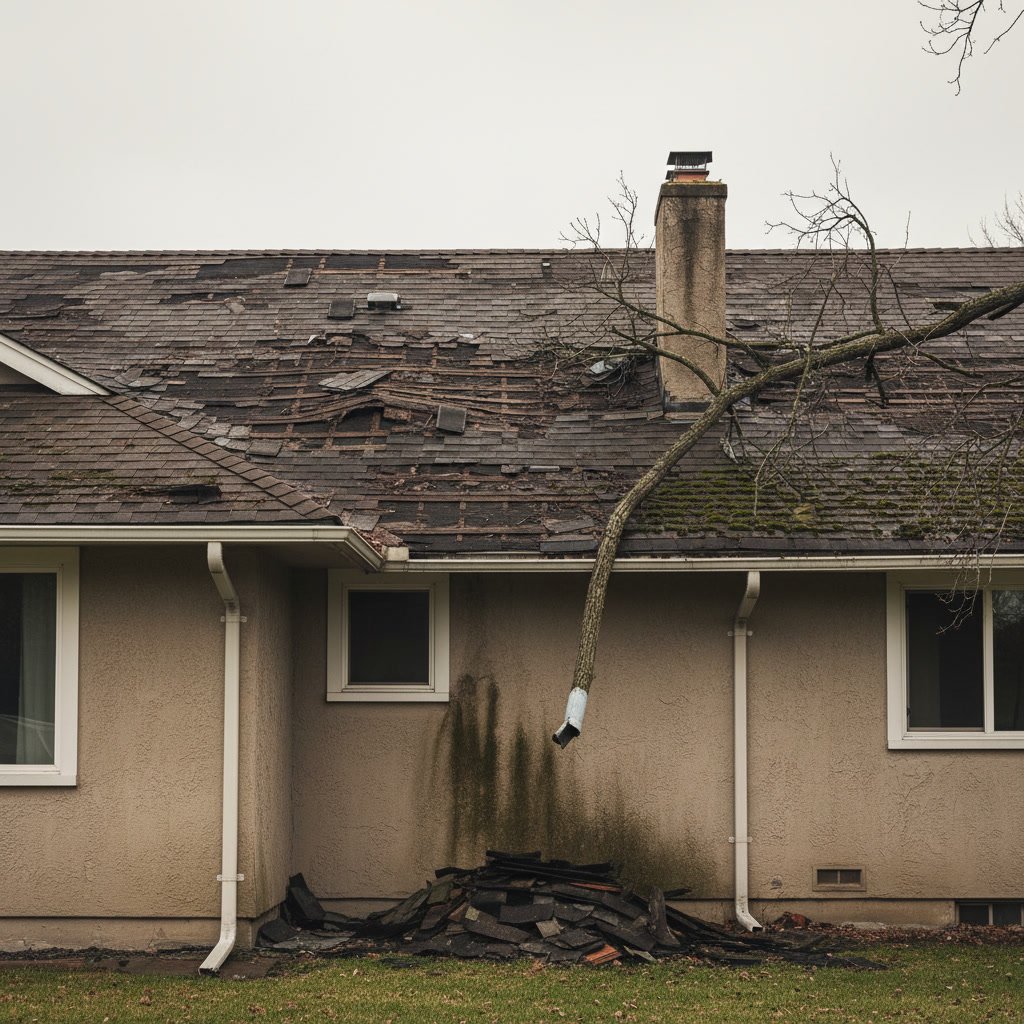
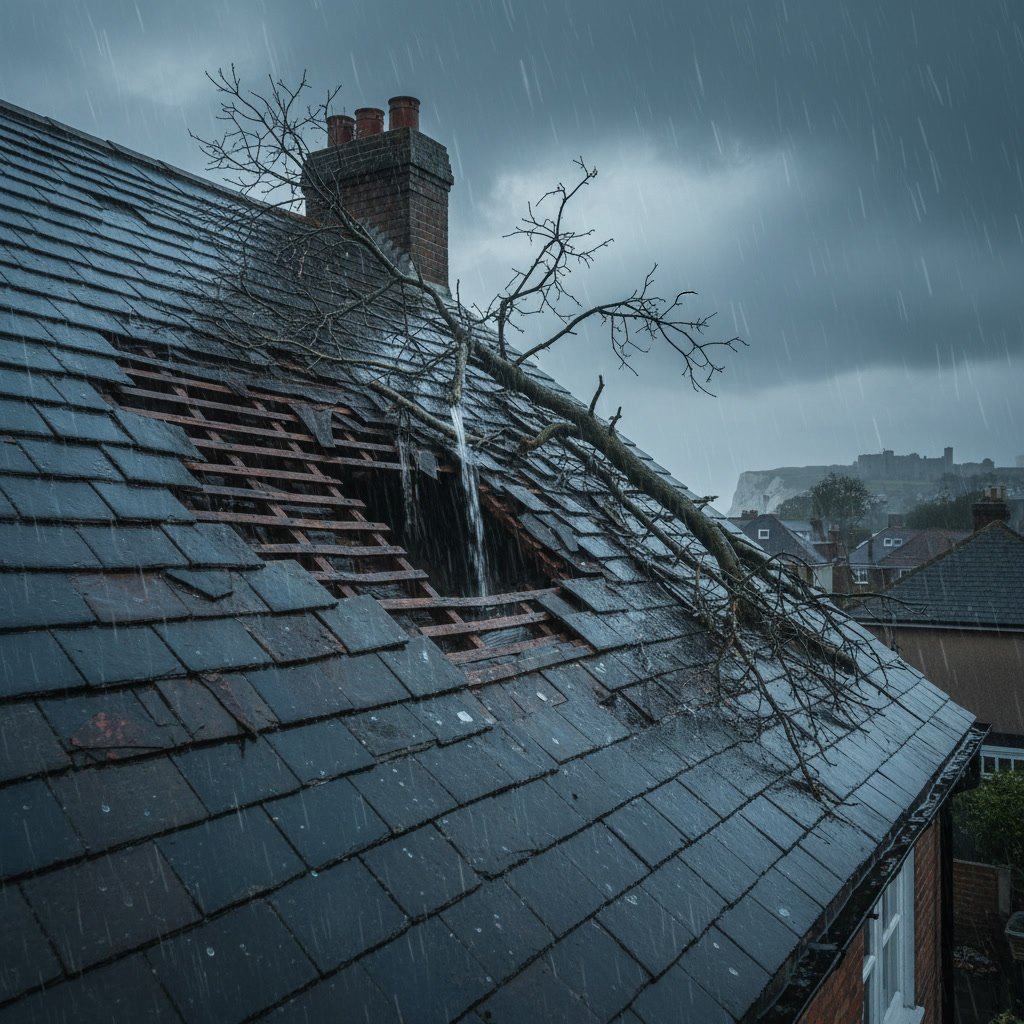
Fallen branches or trees create immediate, obvious damage. Even small branches can puncture roofing materials or crack tiles. Larger limbs can compromise roof decking and structural supports, creating emergency situations that require immediate professional assessment.
Clogged gutters and downspouts cause water to back up under roofing materials. During heavy rainfall typical of Dover’s summer months, blocked drainage systems can’t handle the volume. Water pools at roof edges and finds its way through the smallest gaps in shingles or flashing.
Age-related deterioration sometimes fails suddenly during storms. A roof that’s been slowly deteriorating might hold during normal rain but fail when a severe storm hits. This is why regular roof inspections can prevent emergency situations by catching problems before they become critical.
Key Takeaway: Many emergency roof leaks result from minor maintenance issues that escalated. Annual inspections catch small problems like loose flashing, cracked sealant, or damaged shingles before they fail during storms.
Working with Your Insurance Company
Most homeowners insurance policies cover sudden, accidental roof damage but not damage from lack of maintenance. Understanding this distinction helps you navigate the claims process effectively.
Contact your insurance company as soon as you’ve secured your home and documented the damage. Most policies require prompt notification of losses. Provide them with the photos and videos you captured, along with your written inventory of damaged property.
Ask whether your policy covers emergency mitigation services like tarping or water extraction. Many policies include coverage for reasonable steps to prevent additional damage after a covered loss. Keep receipts for any emergency supplies you purchase, such as tarps, buckets, or cleaning materials.
Your insurance company will send an adjuster to assess the damage. Having a professional roofing contractor’s assessment helps ensure the adjuster captures the full scope of damage. Some damage hidden in attic spaces or under roofing layers only becomes apparent to trained roofing professionals.
Be aware that insurance companies sometimes focus only on visible damage and may not account for hidden issues like saturated insulation or compromised decking. A detailed contractor estimate provides documentation of all necessary repairs, which you can submit to your insurer if their initial assessment seems incomplete.
Preventing Future Emergency Roof Leaks
After experiencing an emergency roof leak in Dover, most homeowners want to prevent a repeat situation. While some storm damage is unavoidable, several proactive measures significantly reduce your risk.
Schedule professional roof inspections at least once per year, preferably before Florida’s summer storm season begins in June. Inspections identify minor issues like loose shingles, degraded flashing, or small cracks before they become emergency leaks. The cost of an inspection is a fraction of emergency repair expenses.
Keep gutters and downspouts clear of debris. Clean them at least twice per year, more often if you have trees near your home. Proper drainage prevents water backup that can work its way under roofing materials.
Trim tree branches that hang over your roof. Branches should clear your roofline by at least six feet. This prevents both falling branch damage and reduces the leaves and debris that clog gutters. During severe weather, even healthy branches can break and damage roofing materials.
Address minor repairs promptly. If you notice a missing shingle, cracked tile, or damaged flashing, schedule repairs before the next storm. What seems like a small issue in dry weather becomes an emergency during heavy rain. Professional roof repair services can handle these minor issues quickly and affordably.
Consider upgrading to impact-resistant materials if your roof needs replacement. Modern roofing products designed for Florida’s climate resist wind damage, hail, and debris better than older materials. When comparing roof replacement costs, factor in the long-term protection that quality materials provide.
Why Response Time Matters for Emergency Roof Leaks
The speed of your response to an emergency roof leak directly impacts the total damage and repair costs. Understanding what happens hour by hour during a roof leak emphasizes why immediate action is critical.
Within the first hour, water penetrates insulation and ceiling materials. Drywall begins absorbing water, and insulation loses its effectiveness. This is the window when quick action can prevent the most damage.
After two to four hours, water spreads laterally through ceiling materials and begins running down wall cavities. Paint begins bubbling, and drywall starts sagging. Electrical fixtures may become hazardous if water reaches wiring.
Between 24 and 48 hours, mold spores begin colonizing damp materials. Once mold establishes itself, remediation becomes necessary beyond the roof repair itself. Mold growth can double every 24 to 48 hours under ideal conditions, which a wet ceiling provides.
After 72 hours, structural damage accelerates. Wood framing absorbs water and begins to rot. Metal fasteners corrode. The longer water remains in contact with building materials, the more extensive the necessary repairs become.
This timeline explains why residential and commercial roofing contractors emphasize emergency response services. A leak addressed within hours might require only roof patching and ceiling repair. The same leak left unaddressed for days can necessitate structural repairs, mold remediation, and extensive interior restoration.
Frequently Asked Questions
How quickly can a roofing contractor respond to an emergency roof leak in Dover?
Most professional roofing companies offering true emergency services can respond within two to four hours during business hours and slightly longer during evenings or weekends. Response time depends on current weather conditions, the contractor’s proximity to Dover, FL, and the number of simultaneous emergencies during major storms. When calling for emergency service, ask specifically about expected arrival time.
Should I file an insurance claim before or after getting a contractor estimate?
Report the damage to your insurance company immediately after securing your property, even before a contractor arrives. Your policy likely requires prompt notification of losses. However, having a professional contractor assessment when the insurance adjuster visits ensures all damage gets documented. Many contractors will work directly with your insurance company to streamline the claims process.
Can I make temporary repairs myself or should I wait for a professional?
You can safely take interior steps like placing buckets, moving belongings, and removing standing water. Simple exterior measures like laying a tarp over visible damage from the ground are generally safe. Never climb on a wet roof or work near power lines. Anything requiring a ladder or roof access should wait for professionals with proper safety equipment and insurance coverage.
How much does emergency roof leak repair typically cost?
Emergency repair costs vary widely based on damage extent, accessibility, time of service, and roof type. Simple leak repairs might cost $300 to $800, while extensive storm damage requiring temporary tarping and major repairs can reach several thousand dollars. Many contractors charge an emergency service fee of $150 to $300 for after-hours calls, which may be credited toward repair costs. Always request a detailed estimate before authorizing non-emergency work.
Will my homeowners insurance cover emergency roof leak damage?
Most homeowners policies cover sudden, accidental damage from storms, falling trees, or other unexpected events. They typically do not cover damage resulting from deferred maintenance, gradual deterioration, or normal wear and tear. Review your policy’s specific coverage and deductible. Keep documentation of regular roof maintenance to demonstrate that damage resulted from a covered event rather than neglect.
Taking Action When Every Minute Counts
An emergency roof leak in Dover demands immediate attention to minimize damage and protect your property investment. By containing water flow, documenting damage thoroughly, and taking appropriate temporary measures, you can significantly reduce the total impact while waiting for professional repairs. The steps you take in those critical first hours often determine whether you face a straightforward repair or extensive restoration work.
Quick Quote Roofing provides emergency roof leak repair services throughout Dover and surrounding areas in Hillsborough County. Our licensed contractors respond quickly to assess damage, provide temporary protection, and complete permanent repairs using quality materials. Whether you need immediate emergency service or want to schedule a preventive inspection, call +18135647603 to speak with our team about protecting your home.